By PRRF · Featuring Alex Dobin, PRRF Board
Quick answer: After a rare retinal disease diagnosis, the most helpful first step is to connect with families who have been through it. Then write down your questions, learn how to ask your eye doctor about the next step (not every step), and find a community you can turn to between appointments. Organizations like the Pediatric Retinal Research Foundation (PRRF) offer free mentorship, family resources, a podcast, and an annual Family Connection Conference to help families find their footing.
Key takeaways:
- You don’t need every answer on day one. Focus on the next step.
- Talking with another family who has been through the same diagnosis is one of the fastest ways to feel less alone.
- Every family’s “day one” looks different, so support should meet you where you are.
- Eye appointments can be 6 to 12 months apart. A community can answer everyday questions in between.
- You can choose to own a diagnosis, rather than letting it own you.
“I want families to walk out of the doctor’s office knowing that PRRF is the next place they should go to get some comfort.” ~ Alex Dobin
“What Do We Do Next?” The Question Every Family Asks
A diagnosis of a rare retinal disease, like familial exudative vitreoretinopathy (FEVR), retinopathy of prematurity (ROP), or Coats’ disease, can leave families with more questions than answers. For some, the diagnosis comes when a child is only days old. For others, it arrives years later.
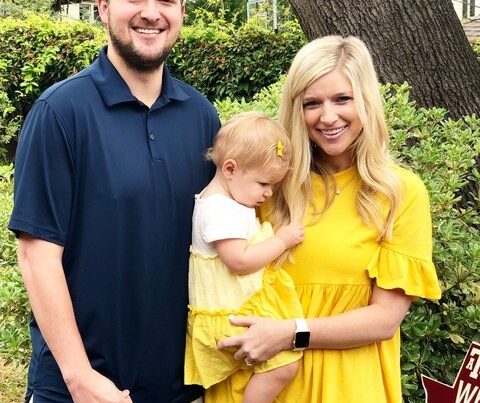
For Alex Dobin and his wife, Alba, it began with a single question. “My wife and I looked at each other and we said, what do we do next?” Alex remembers.
The answer did not come right away. “It was by happenstance that we found a Facebook group that connected us with the PRRF,” he says. “It took us a few weeks to make that connection. I wish I would have had that connection in seconds.”
Today, Alex serves on the Fundação para a Investigação da Retina Pediátrica Board of Directors. Closing that gap for other families is a big part of why. Here are five lessons he wishes someone had shared with his family on day one.
5 Lessons for Families Facing a New Rare Retinal Disease Diagnosis
1. Connect With a Family Who Has Been There
The fastest way to feel less alone after a diagnosis is to hear from a family who has already walked the same road. Alex will never forget the first PRRF Family Advisory Committee call he joined. He and Alba simply listened as another family shared their story: the decisions they faced, the risks they weighed, and, most importantly, what life could look like on the other side.
“We were able to understand what they went through,” Alex says. “But really, more so, what the potential positive outcomes were. How you can learn to live with an eye disease.”
PRRF’s free Mentorship Program pairs families with others who understand. You can request a mentor here.
2. Choose to Own the Diagnosis
A diagnosis does not have to define your family’s future. “There’s the old phrase: you can have a disability and let it own you, or you can have a disability and you can own it,” Alex says. “We decided to take the latter route. We wanted to own every decision. We wanted to make sure that we understood what we were facing.”
3. Remember That Every Family’s “Day One” Looks Different
There is no one right way to react to a rare retinal disease diagnosis. “You get the ‘my God, what are you talking about?’ all the way to ‘yep, my grandfather, my father, and now I have this,'” Alex explains. “Day one looks different for me than it looks for you than it looks for the next person.”
Alex knows this from experience. “I had no idea, didn’t know where to turn, and wish I would have had a PRRF,” he says.
That is why he believes support should meet people where they are. One family is preparing for an IEP meeting at school. Another wants to know whether their child can play sports. Another is trying to get a three-year-old to wear glasses or keep an eye patch on. “Helping somebody with a three-year-old is a lot different than helping somebody with a 17-year-old join the workforce,” Alex says. PRRF offers separate resources for parents and for young adults for exactly this reason.
4. Focus on the Next Step, Not Every Step
You don’t need all the answers on day one; you need enough information to take the next step. “We knew we didn’t have all the answers, but we knew we had a lot of questions,” Alex says. “The staff and the doctors were able to really help guide us on the right pathway.”
Alex calls this “step one guidance.” It includes learning how to ask your eye doctor the right questions, then bringing that information home “so that everybody’s speaking from the same book, and there’s less confusion for family members.”
Questions families often bring to their retina specialist:
- What stage is the disease, and is it likely to change?
- What treatment options exist now, and are any clinical trials relevant to us?
- How often should we come back for monitoring, and what symptoms mean we should call sooner?
- Should we consider genetic testing for other family members?
- Who can help with school accommodations or vision rehabilitation?
5. Build a Community for the Months Between Appointments
Eye appointments can be six, eight, or even twelve months apart, so having a community to turn to in between makes a real difference. That could be a website, a Facebook group, a podcast, or simply someone to talk to.
“There are questions that I would have never thought to ask that somebody is giving me guidance on,” Alex says. For his family, connections made at the Hope for Vision Walk and the annual Family Connection Conference have been especially valuable. PRRF’s Through Our Eyes podcast is another way to hear from doctors, parents, and young adults living with rare retinal diseases.
How Does PRRF Support Families With Rare Retinal Diseases?
PRRF supports families with what Alex calls a “360-degree” approach: physicians treat the eye condition, while PRRF helps families care for themselves through mentorship, education, community events, and research funding. “We talk a lot about helping people find the right doctors,” he says, “and then the right doctors helping people find their way to the PRRF.”
That support is shaped by what families ask for. Each year, the board holds a strategic vision meeting to set priorities for research, funding, and community programs, and those priorities come from listening at the conference, at the walk, in Facebook groups, and in emails. The Through Our Eyes podcast, for example, grew directly out of families asking to hear more from doctors, parents, and young people living with rare retinal diseases.
Alex joined the board a couple of years ago and is quick to say it is a working board. “There is not a single board member that is part of that board to have their name on the letterhead,” he says. “We really roll up the sleeves and get stuff done together.”
The scale of the challenge is part of what drives him. A rare disease might affect only a few thousand people, and PRRF might know only a handful of them. “Our hope is that we are going to be able to become that one-stop shop for people to understand how they can have more hope,” Alex says. That includes not just the person with the diagnosis, but everyone around them: family members, educators, and friends.
Why the Hope for Vision Walk Matters
The annual Hope for Vision Walk raises funds for pediatric retinal disease research and brings families together in person. For Alex, it is a rallying point for his whole circle: his wife, brothers, aunts, uncles, cousins, and coworkers. “Everybody understands that at the end of the day, any donation really goes towards directly helping to fight for a cure,” he says. “The name ‘Hope for Vision’ was not selected lightly.”
Those donations add up. PRRF-funded research at Oakland University’s Pediatric Retinal Research Lab helped develop Noregen™, a potential therapy for FEVR that is now preparing for clinical trials, and in 2025 PRRF launched a pilot grant program to help researchers test promising new ideas. You can read more about PRRF’s research here.
Final Thoughts: You’re Not on an Island
PRRF began with a Michigan focus and today supports families across the United States and around the world. Alex believes growth in membership, donations, and awareness matters because anyone can be affected. “You may not be impacted, but somebody that you know may be impacted,” he says. Everyone can help, whether that is a donation, a bake sale, or simply pointing someone toward prrf.org.
Most of all, he wants the next family to find support faster than he did. “I want them to walk out of the doctor’s office knowing that the PRRF is the next place they should go to get some comfort,” he says. “Not necessarily all the information. Everybody’s case is different. But at least get some comfort to know that you’re not on an island by yourself, that you’ve got an island of others with you.”
As Alex puts it: “There is a day after tomorrow, and a day after that, and a day after that. Our goal is to help arm you with the right information to go through those days with as little concern and as much comfort as possible.”
Just starting your journey? You don’t have to figure it out alone. Connect with a mentor, explore our resources for parents, or join us at an upcoming event.
Frequently Asked Questions
What should I do right after my child is diagnosed with a rare retinal disease?
Start by writing down your questions and asking your retina specialist what the next step is. Then connect with a support organization like the Pediatric Retinal Research Foundation (PRRF), which offers free mentorship, family resources, and events where you can meet other families facing the same diagnosis.
Where can parents of children with rare eye diseases find support?
Parents can find support through PRRF’s Mentorship Program, its For Parents resource page, the Through Our Eyes podcast, the annual Family Connection Conference, and the Hope for Vision Walk. Online groups and advocacy organizations for people who are blind or have low vision can also help.
What is the Pediatric Retinal Research Foundation?
The Pediatric Retinal Research Foundation (PRRF) is a nonprofit based in Michigan that supports families affected by blinding pediatric retinal diseases and funds research toward cures. It was founded in 1990 and supports families in the United States and internationally.
Which retinal diseases does PRRF support?
PRRF supports families affected by rare pediatric retinal diseases, including Coats’ disease, FEVR, Norrie disease, PFVS, ROP, congenital X-linked retinoschisis, and Stickler syndrome.
How can I support pediatric retinal disease research?
You can donate to PRRF, join or fundraise for the Hope for Vision Walk, host a fundraiser, or volunteer. Donations support research at Oakland University’s Pediatric Retinal Research Lab and community programs for families.
Health Disclaimer
This article shares personal experiences and general information. It is not medical advice and does not replace guidance from your doctor or healthcare team. If you have questions about your or your child’s vision or any medical condition, please talk with a qualified professional who knows your situation.
About Alex Dobin: Alex Dobin serves on the Pediatric Retinal Research Foundation Board of Directors. He and his wife, Alba, are active members of the PRRF community and the Family Advisory Committee, and they participate each year in the Hope for Vision Walk and Family Connection Conference.
Related reading:
- How One Michigan Family Built Connections And Inspired Global Support For Retinal Research
- Gene Therapy, Clinical Trials, and a FEVR Cure: Where the Science Stands in 2026
- Life After Blindness: Connecting Patients with Vision Rehab Support Early On
- Best Smart Glasses for Low Vision in 2025: 7 Options Reviewed








 Português
  English
  Español de México
  Français
  Deutsch
  Nederlands
  简体中文
简体中文  日本語
日本語  Русский
  Italiano