
Season 3 | Episode 51
July 28, 2026
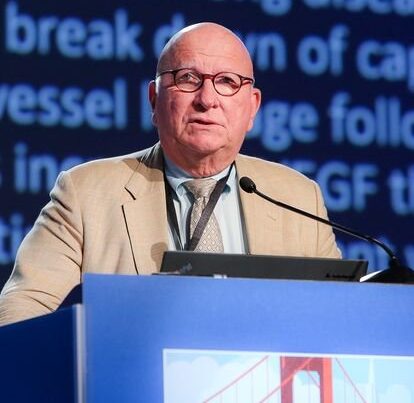
In 1998, Carlos T. Reza was a correctional officer in California when he first noticed something was wrong with his vision on the firing range. Within a year, after multiple surgeries and a cornea transplant, he had lost vision in both eyes.
In this episode, Carlos sits down with Jeanne McClellan to share what it was really like to navigate vision loss in his early thirties — medically retiring from the prison system, learning to use a cane, picking up braille, and then deciding, with no college experience, that he was going to earn a doctoral degree in psychology.
Thirteen years later, he did. Walking across the graduation stage to a standing ovation, Carlos knew he was exactly where he was supposed to be. His message to anyone navigating vision loss is simple: accept it, embrace it, and figure out how to use it to move forward. You cannot finish a race without doing one step at a time.
Want to be a guest on the podcast? If you or someone you know has a story to share — whether you’ve experienced a pediatric retinal condition yourself or are raising a child who has — we’d love to hear from you. Reach out to us at throughoureyes@prrf.org.
You can find more episodes and ways to get involved with the Pediatric Retinal Research Foundation here: https://linktr.ee/throughoureyespodcast
Transcript
Luisa Recchia: Welcome to Through Our Eyes, a podcast of the Pediatric Retinal Research Foundation, where we share honest stories of vision loss, resilience, and the many ways people build meaningful lives beyond a diagnosis.
In this conversation, Jeanne McClellan speaks with Dr. Carlos T. Reza. Dr. Reza was working as a correctional officer in California when retinal detachments caused him to lose his vision. His life and career changed suddenly, forcing him to confront uncertainty, learn new ways of navigating the world, and reconsider what his future might hold.
Dr. Reza shares his experience with remarkable honesty, humor, and perspective, from the initial shock of vision loss to rehabilitation, learning braille and assistive technology, and beginning to imagine a new path forward. Here is Jeanne’s conversation with Dr. Carlos T. Reza.
Jeanne McClellan: [00:00:00] Where I’d like to begin is with having you just tell me what was going on in your life, what was the context, if you will, when you started to lose vision?
Carlos T. Reza: Okay. So at that time, this was in 1998. I’ll start at the very beginning.
Jeanne McClellan: Okay.
Carlos T. Reza: Um, 1998, I was working as a, uh, correctional officer for the state prisons here in California.
Jeanne McClellan: Mm-hmm.
Carlos T. Reza: And I had started to have difficulties with my center vision. I discovered that when I was out on the firing range qual- you know, qualifying quarterly is what we do- Mm-hmm … to, you know, make sure that we’re able to shoot accurately. If not, um, they remove, remove you from that position. And so I had gone out to the range, and I’ve never had difficulties, never failed [00:01:00] my range.
And when I got out there, looking through the little military peep sight on the rifle, I wasn’t able to see the target at 100 yards.
Jeanne McClellan: Wow.
Carlos T. Reza: And so I raised my hand, you know, asked if I could shoot left-handed. They said no. You know, I started right, so I had f- I had failed that, and I thought maybe this was, uh, my contacts.
Um, I’m right-handed, so it was my right eye. And so I went into an optometrist to go, increase my prescription, and my vision at that time was 20/40. And as they look and do the normal retinal exam looking into your eye he clicked it, the little light off, and he told me, he said, “I’m gonna need to refer you to an ophthalmologist.”
Mm. “Your retina’s starting to detach.” Oh, okay. And so yeah, that was a- Mm-hmm … that was a [00:02:00] shock.
Jeanne McClellan: Mm-hmm.
Carlos T. Reza: And so, you know, after the shock, the referral was made. I had gone in probably a couple weeks later and met with my ophthalmologist, and she sat me down in the little exam and she’s looking in the back of my eye, and about 30 seconds later she said, “We’re gonna have to do surgery this coming Friday.”
Mm-hmm. And I was like, “What?”
Jeanne McClellan: Wow. Wow.
Carlos T. Reza: Um, so she said she was gonna do a vitrectomy and go in and try to reattach the retina and put in a gas bubble, and that I would have to stay face down for the next, uh, couple weeks.
Jeanne McClellan: Yeah.
Carlos T. Reza: So going in at that point I, You know, had started to lose the vision in that eye even at that point, it just, I never recovered the vision in my right eye.
Jeanne McClellan: So the vitrectomy was a, [00:03:00] it didn’t work.
Carlos T. Reza: Yeah. Okay. And a little side note is that when, right when I got back to work, um, this was in 1998, we had the largest riot out on the grounds. Oh my gosh. And so I had … I shot left-handed that day, but had to fire on the inmates a, on a couple different occasions.
So-
Jeanne McClellan: Mm.
Carlos T. Reza: But most of my, uh, colleagues that I was working with that day, you know, they were saying that I was the one that stopped it, and I said we all stopped it.” We’re like, “It wasn’t just me.” But they were glad that I was firing out on the grounds just because that was what quelled the riot.
There was about 400 inmates out there fighting.
Jeanne McClellan: Oh my God.
Carlos T. Reza: Yeah. Geez. So, that was August of ’98 when I had the surgery on my right eye, and August of ’99, I started … Well, I would say July [00:04:00] of ’99, I started having difficulties with my left eye. I, I have no vision in my right eye at that point in time.
Jeanne McClellan: Oh
Carlos T. Reza: my gosh.
Um, and so- Well, were you
Jeanne McClellan: still working?
Carlos T. Reza: Yes. So I was- Okay … I was still working. I was qualifying out on the range left-handed.
Jeanne McClellan: Okay.
Carlos T. Reza: And- That’s pretty- … you know, still working … Yeah, still working and just-
Jeanne McClellan: Pretty amazing that you keep working.
Carlos T. Reza: I didn’t know what else to do. So.
Jeanne McClellan: Right.
Carlos T. Reza: So for a whole, I would say in July, started noticing some differences in my left eye, and so I had gone into the same ophthalmologist and she said, “It looks like there’s some scar tissue from the, the diabetes,” and it had started, uh, creating this scar tissue, and the scar tissue was pulling my retina away on the left side.
Jeanne McClellan: So all this was due … Let me back up one second, Carlos. Mm-hmm. So this was due be- due to the fact that you had diabetes?
Carlos T. Reza: [00:05:00] Correct.
Jeanne McClellan: This was diabetic retinopathy that was happening.
Carlos T. Reza: Correct.
Jeanne McClellan: Okay.
Carlos T. Reza: Yeah. And so at that point in time we scheduled another, you know, uh, surgery for August 6 of 1999.
And when I had my last day, August 4th, when I was driving away from the prison, you know, still having some difficulties, um, at n- at, definitely at night. I wouldn’t drive at night. But during- Mm-hmm … the day I was still able to drive with the vision in my left eye. But just looking back at the prison, knowing this might be the last time I see this.
Um, and so August 6, I went in for another vitrectomy in my left eye.
Uh, she tried to clear away some of the scar tissue and reattach- Mm-hmm … and went through the same process. And it wasn’t, I wasn’t recovering the vision.
Jeanne McClellan: Mm-hmm.
Carlos T. Reza: And so I was, I went through about a year and a half worth [00:06:00] of four, I’m sorry, three more vitrectomies and one cornea transplant.
Jeanne McClellan: Hmm. Geez.
Carlos T. Reza: Because when they removed my lens and being face down, the blood kinda settled on my cornea, and so they replaced the cornea, but that didn’t work. And so it left me at a point where I had to decide, you know, I couldn’t go back to work, but I had, to the month, uh, five years in with the state, so I was able to medically retire and retain my benefits.
Jeanne McClellan: Thank God. Um, yeah. Wow, you made that by the skin of your teeth.
Carlos T. Reza: Yeah. The, and that was due to a lot of help from other officers donating some time to me, um, ’cause I had exhausted all of my vacation time, my sick time.
Jeanne McClellan: Right.
Carlos T. Reza: And I, that’s basically what I was living on. So that, that got me through to that point.
But that is how all of this [00:07:00] began. Then of course I had, um, called the Department of Rehab and h- asked them I need to be retrained for something because I, they’re, they’re not gonna do any more surgeries, otherwise they would have to remove my eyes. Mm-hmm. And I said, “No, just leave them. Maybe sometime in the future they’ll be able to fix this.”
Jeanne McClellan: Yeah …
Carlos T. Reza: That, you know, that’s, that still hasn’t occurred and that’s okay. I have accepted being blind, but-
Jeanne McClellan: Yeah. Yeah. Wow. Okay. So by 1999, you had lost vision in both eyes.
Carlos T. Reza: Correct.
Jeanne McClellan: Okay. Now, you were married and raising a family at that time, weren’t you? Or-
Carlos T. Reza: Yes. So I was, um, married at that time and had a daughter at, uh, during that time. And, and one on the way. It was gonna be, um, she was born in December-
Jeanne McClellan: Mm-hmm. Okay …
Carlos T. Reza: of ’99.
Jeanne McClellan: Okay. So [00:08:00] then when you went to the Department of Rehab, how long after y- you contacted DR did they send you to DPI?
Carlos T. Reza: So I contacted, so immediately after they told me, uh, I could not, uh, do any more surgeries and you know, I was gonna have to figure out what I was gonna do with the rest of my life, and this was-
So at that time I was, ’99, I think that was, I’m sorry, that was more in 2000- Okay … um, once they had said that, you know, there’s nothing else they can do.
Jeanne McClellan: Wow …
Carlos T. Reza: That was on a Saturday when she told me that. And I called up the Department of Rehab on Monday,
Jeanne McClellan: Wow.
Carlos T. Reza: Yeah. Mm-hmm … and, and asked them to retrain me for some type of state job. And so they had advised me, because I was gonna move back from Blythe, California out to Fontana you know, within the [00:09:00] next couple of months, they, uh, they told me just to hang on until I got to the San Bernardino County.
Jeanne McClellan: Okay.
Carlos T. Reza: And so that is when I met Bob Humble. And- Oh,
Jeanne McClellan: Yeah. I remember that name. And- Yeah.
Carlos T. Reza: Yeah. So he had come out and kind of-
Jeanne McClellan: He was a good counselor. He was a good counselor. Oh.
Carlos T. Reza: Yeah. He retired shortly after, um, I had gotten in.
Jeanne McClellan: Mm-hmm.
Carlos T. Reza: I think he figured he accomplished something big when he, when I finally got in there.
Jeanne McClellan: Right. Right. Uh. He could go out in glory.
Carlos T. Reza: Yeah. Yeah. So he had, um, came over and gave me a cane and, you know, kind of gave me some basics of how to navigate, and that- Mm-hmm … I would have to learn some independent living skills before- Mm.
Jeanne McClellan: Mm-hmm …
Carlos T. Reza: before that. So this was in January of [00:10:00] 2001.
Jeanne McClellan: Okay.
Carlos T. Reza: And he expedited that whole process.
He felt that I was ready emotionally to start moving forward. Mm-hmm. And I was enrolled and started at DPI in April of 2001.
Jeanne McClellan: Okay. Did you have a period of grieving?
Carlos T. Reza: I would say looking now as a psychologist, looking back it’s easier to identify.
Jeanne McClellan: Right.
Carlos T. Reza: But yes, I think I went through all five stages of denial.
I think that’s where I was at when I was at DPI. Mm-hmm. That this wasn’t gonna get me down, and this wasn’t gonna stop me from moving forward in life.
Jeanne McClellan: Right.
Carlos T. Reza: Um, you know, and at that time I was, what?
Jeanne McClellan: 32. Um- Still had a positive, uh, fighter approach.
Carlos T. Reza: Yeah.
Jeanne McClellan: Yeah.
Carlos T. Reza: Yeah.
Jeanne McClellan: Yeah.
Carlos T. Reza: And so that but going through, you know, a depressive stage at [00:11:00] times, um, when I was there at DPI.
Jeanne McClellan: Mm-hmm.
Carlos T. Reza: Um, a lot of times, you know, I would be in my room and just trying to focus on myself and, you know, say everything’s gonna be okay.
Jeanne McClellan: Right.
Carlos T. Reza: Um, you know, socializing also, but it was more of a distraction from the depression. Mm-hmm. Um, you know, I don’t know that I actually ever got angry.
Jeanne McClellan: Mm.
Carlos T. Reza: If I did, I do not remember that stage because that is you know, something that’s, you know, blaming God or blaming somebody else- Mm-hmm … or science or whatever it may be, and I didn’t feel that way. I felt that this happened for a reason, and that- Mm-hmm … I was gonna go with it and make the best of it.
Jeanne McClellan: And- So you were strong, you had strong faith then.
Carlos T. Reza: Yes. I, yeah, wasn’t, uh,
Jeanne McClellan: I, I- Consciously aware of, maybe not aware of [00:12:00] it in a Christian sense, but just a strong sense that something is, something’s better gonna come. Something better- Yeah … is gonna come.
Carlos T. Reza: Oh, yeah. And I, I think that God, because I, I would consider, I am Christian.
Jeanne McClellan: Right.
Carlos T. Reza: Um, but that there, there are, going through th- this whole, in reflection, going through this whole story is really a, a testimony- … um, for me because this, too many things fell into place that should not have-
Jeanne McClellan: Oh, great …
Carlos T. Reza: at the, and the timing that it did.
Jeanne McClellan: Okay.
Carlos T. Reza: Um-
Jeanne McClellan: Good …
Carlos T. Reza: and so that, that is, uh, you know, what I believe.
I think that I’m where God wants me to be-
Jeanne McClellan: Mm-hmm …
Carlos T. Reza: um, and doing what God wants me to do, and-
Jeanne McClellan: Good for you …
Carlos T. Reza: as long, and as long as we’re doing that, it’s n- it’s not as difficult as it could be.
Jeanne McClellan: That’s right. That’s right. Um- Good job. I’m a devout [00:13:00] Christian as well, so I, I get where you’re coming from, for sure.
Carlos T. Reza: Mm-hmm.
Jeanne McClellan: Yeah. Yeah. Good for you. Well, God bless you. All right. Thank you. Let’s carry on. Let’s carry on. Mm-hmm. Okay, so you go to DPI. Let’s take it from there. You go to DPI, and I’m just curious, I told Virginia, I’m gonna ask Carlos to be honest, and tell me- Okay … if DPI was a good experience or Obviously you got some good O&M training from our dear Virginia, who’s a wonderful teacher.
Carlos T. Reza: Yes.
Jeanne McClellan: How about the other skills? Did you r- did you get good stu- stuff from computer training and braille, and did you learn a lot of stuff that w- you’re able, have been able to use?
Carlos T. Reza: I would say that the independent living skills, um, when Bonnie was still there.
Jeanne McClellan: Mm-hmm.
Carlos T. Reza: Um, it b- I loved Bonnie when she was there.
She is actually the person that I went to and broke [00:14:00] down at one point in time.
Jeanne McClellan: Mm.
Carlos T. Reza: And, um, just kind of going over that, that story, but were those, some of the things that I was learning in there, were they crucial to me? No. Right. Because I can conceptualize, you know, what the room looks like, where the bed’s at.
It’s like, okay, well this is the headboard, then the footboard- Right … must be on the other end, you know? Right. Right. Um, common sense. But you know, going through and trying to learn how to navigate, um, with some safety in the kitchen, I think that there were some skills that I learned in there that are still important to me.
Jeanne McClellan: Good.
Carlos T. Reza: Um, you know, especially with knives.
Jeanne McClellan: Right.
Carlos T. Reza: And uh, just having the confidence of being able to like, all right, let me, let me cook this. Like, um, if I mess it up, I mess it up. There’s, you know, it’s not- Mm-hmm … going to kill anything.
Jeanne McClellan: Right.
Carlos T. Reza: Um-
Jeanne McClellan: Okay …
Carlos T. Reza: I would say that the computer skills, I learned some basics because I did not use a computer [00:15:00] before losing my eyesight.
Wow. You know, being so early in the 2000s getting familiar with JAWS. But I was getting familiar with computer programs at that time also. Um, so there was, there was two, it was a multilevel learning experience, us going through that. That was, that broke the ice. I don’t know that I gained any super valuable skills, but it was skills that I was able to build upon-
Jeanne McClellan: Right
Carlos T. Reza: That help me navigate my work now.
Jeanne McClellan: Okay.
Carlos T. Reza: Um-
Jeanne McClellan: Good. Do you use JAWS now?
Carlos T. Reza: Oh, absolutely. Yes.
Jeanne McClellan: Okay. Yeah. Good.
Carlos T. Reza: And u- using, um, you know, going through braille, I would say- So
Jeanne McClellan: Ruth and Cheri were there then, right? Ruth and Cheri?
Carlos T. Reza: Uh, yes. Mm-hmm.
Jeanne McClellan: Okay.
Carlos T. Reza: Yeah. And I would say, so Ruth had told me when I was in there that I was the q- person [00:16:00] that was the quickest she had seen, uh, in 16 years at that time-
Jeanne McClellan: Mm
Carlos T. Reza: um, to catch onto braille. But I see patterns even when I, when I was visual. Mm-hmm. I just catch onto patterns, and braille is just a pattern to me. Mm-hmm.
Jeanne McClellan: Mm-hmm.
Carlos T. Reza: And so, you know, of course I caught onto the whole alphabet within the t- 20 minutes, and she kept asking me, “Are you sure you have not learned braille before?”
But I do not use braille now. Maybe on the elevators, um- Right … but aside from that, do I, do I look for things? No. I would say braille is just kinda obsolete for me, and I know some people depend on that, which is great. Oh,
Jeanne McClellan: yeah. Mm-hmm. Right.
Carlos T. Reza: But there’s so much technology now-
Jeanne McClellan: Right …
Carlos T. Reza: It’s unnecessary for me to navigate life,
Jeanne McClellan: right. The only ti- the only thing about braille that makes [00:17:00] it critical is for people that are blind from birth, kids that are being born blind from birth. Mm-hmm. Because it’s literally literacy. They don’t- Yes … understand the formation of words and language unless they’re l- learning how to spell with, with braille and how to compose sentences and stuff.
So it’s, it’s a, it’s literacy for the young people. But so it’s- Uh-huh … still a necessary tool. But for you, yes, who had already had, who was already literate, no, it’s- Mm-hmm … and with the technology that we have now, I don’t use braille either. Mm-hmm. I’ve never, I’ve never learned braille because there’s so much audio technology now that we’ve got,
Carlos T. Reza: Yes.
Jeanne McClellan: So from DPI you go back to Bob Humboldt, and does he wanna place you in a job at that point? What happens next?
Carlos T. Reza: Um, so at that point in time uh, contacting Bob Humboldt, I had asked, asked him, I said, “Okay I want to get into the vocational program.”
I had already planned this out and made phone calls [00:18:00] to see if I’d be able to work as a psychologist at Patton State Hospital.
Jeanne McClellan: Oh, okay.
Carlos T. Reza: Um, the reason why I chose that is because Patton State Hospital is a lot of what they call 1026 now that I’m working there. It’s guilty, but not guilty by reason of insanity.
We also have those that are, uh, incompetent to stand trial- … or people that are just long-term mentally ill that, you know, need care. Okay … so I had c- I had called up there while I was pursuing, uh, Ed Crespin over in-
Jeanne McClellan: Oh, yeah …
Carlos T. Reza: San Marino. Yeah.
Jeanne McClellan: I remember Ed Crespin.
Carlos T. Reza: Um, and just pushing to get into the vocational program so that I could start college.
I did not want to miss the Um, I think at that time it was called the spring semester- Mm-hmm. -um, of that Chaffey College in Rancho Cucamonga.
Jeanne McClellan: Mm-hmm.
Carlos T. Reza: [00:19:00] And that, So when I graduated, it was like, um, November first or second when I left DPI, and so I just kept making phone calls because I’m just super persistent, annoyingly persistent.
Jeanne McClellan: Good.
Carlos T. Reza: Um, just-
Jeanne McClellan: You
Carlos T. Reza: have to be. -advocating. Yeah. Yeah. Just have to advocate for myself, but-
Jeanne McClellan: Absolutely.
Carlos T. Reza: Um, so he was on vacation, and so when he got back, I was able to go sign up for the spring semester at Chaffey College.
Jeanne McClellan: Now, what were you going– You were going for a bachelor’s degree at this point, or a master’s degree, or what?
Carlos T. Reza: Um, that was for an AA degree because-
Jeanne McClellan: Okay. –
Carlos T. Reza: Well, it was to get the general, uh, liberal arts and science, uh, courses out of the way- Okay. -so that I’d be able to transfer up to Cal, uh, State San Bernardino.
Jeanne McClellan: Okay.
Carlos T. Reza: Um, I think that’s a way for Department of [00:20:00] Rehabilitation to test to see if you’re- Right. -college material.
Okay. Um, in, uh– so that is when I got over to Chaffey, and I started. I’d never taken college courses before, and I wasn’t interested in that prior to losing my eyesight.
So I went into, um, you know, got into a couple classes. There, of course, they have, uh, disability services there at the college, and I was enrolled in that. I sat down with a counselor, and she said, “Okay, so what is it that you’d like to pursue?” And I told her what it was, and she said, “Okay, let’s focus on liberal arts and sciences for your general education, and uh, and we’ll move from there.”
I said I’m looking for the shortest route from point A to point B here.” Mm-hmm. I said, “Because this is only the first step in what I’m choosing to accomplish [00:21:00] as far as my doctoral degree in psychology.” And so she said, “Okay.” And so I planned my whole two years while I was there- Wow. -um, with her. Never had to go see her again, but I knew what all the courses I needed to take.
And of course, getting priority registration is always a benefit.
Jeanne McClellan: Right.
Carlos T. Reza: Mm-hmm. Um, and so got into the courses. I was hoping I’d be able to, you know, make it through the first semester, and I ended up with a B in one of my classes. So I had earned a computer system from DPI through the Angel program.
And so they, uh… I think I was one of two people that earned that grant. And The computer crashed or I, I was having difficulties with it, and I wasn’t able to write a research paper. So I ended up getting a B ’cause I wasn’t able to complete that [00:22:00] research. But my other two classes I earned an A in. So I was like, “Okay, I, I think I can handle this,” so I- Good for you … pursued. Yeah. And I did the classes that I wasn’t really interested in.
I did the expedited courses during the summer.
And I got A’s through all of those. And then the next semester, straight A’s, and so on and so forth. So by the time I went in to see my academic counselor, she was just amazed at how I had gotten through the courses, um, with the grades that I had.
And I, I was a little shamed when I got in there. I thought everybody else had four point O’s. And I had a three point nine. And she says, “Who’s got a four point O?” She was like – Wow. “You’re, you’re doing great.” And she said, “I would love to have you come [00:23:00] in and speak to my academic probation class, um, and just do inspirational speaking.”
And I told her I– “Sure.” Susan Starr is, uh, was my counselor at that time. She’s retired. But I spoke for her for, uh, up through my master’s degree. And she just recorded me. She said, “I know it’s making it difficult. You have to travel over here.” She said, “I’m just gonna record and just play this, for a class, um, you know, once a semester.”
But-
Jeanne McClellan: Cool.
Carlos T. Reza: So I transferred up to which I– what I understood was that you could not transfer up to Cal State San Bernardino midyear and during that time. So this was, uh, going into Cal State San Bernardino in the winter quarter of two thousand and four.
Jeanne McClellan: Okay.
Carlos T. Reza: [00:24:00] And a couple of the guys I was going to school with, uh, they did not get in.
However, I did.
Jeanne McClellan: Mm-hmm.
Carlos T. Reza: Um, and so I, you know, continued to take my courses you know, a little bit more difficult than it was at, uh, junior college. And I ultimately ended up graduating with a three point six.
Jeanne McClellan: Good for you.
Carlos T. Reza: And I took a year off. I wasn’t aware of, um- There’s nobody in my family that is college-educated.
Jeanne McClellan: Mm-hmm.
Carlos T. Reza: And so when I, I had nobody to ask questions, and I just thought you selected one grad school, and you put in your application and, you get in. Mm. Like, I didn’t think it was gonna be difficult. Just like going into junior college. You, you don’t worry about are you gonna be accepted, you just get in there.
So-
Jeanne McClellan: Right …
Carlos T. Reza: I had applied to Loma Linda. Mm-hmm. Um, still living in [00:25:00] Fontana at that time. And that was where I, um, I went straight for the doctoral program. I did not apply for the master’s program.
Jeanne McClellan: Mm.
Carlos T. Reza: Um, and because I figured let’s cut this short, um, because it took me four years to complete my bachelor’s.
Took a year off, but I didn’t want to spend more time going through courses before getting into the work- Okay … environment.
Jeanne McClellan: Mm-hmm.
Carlos T. Reza: And so I was accepted into Loma Linda and I was accepted into the doctoral program.
I don’t know if that was partly because of my disability, but even if it is, I accept that. Absolutely. I didn’t ask to be blind. Absolutely. I didn’t ask to be blind. I always- And I’m gonna use all the advantages.
Jeanne McClellan: Absolutely. Absolutely. I always tell people, [00:26:00] “Make your disability work for you.” Yes. I absolutely believe in that one hundred percent ’cause we didn’t ask for it, and by golly, we’re trying to navigate life w– to the best of our ability, and we’re gonna take advantage of whatever we can take advantage of. Absolutely. Mm-hmm.
Right on.
Carlos T. Reza: Yeah.
Jeanne McClellan: Good. Yeah, so for whatever reason- They got you in. Good.
Carlos T. Reza: Yes. And so, uh, you know, for two and a half years I completed a master’s degree in psychology.
Jeanne McClellan: Mm-hmm.
Carlos T. Reza: Um, and it did take me a little longer going through, but what I discovered going through grad school is it’s not a race. I don’t need to keep up with people that are visual. They’re not running my race. I don’t know if they could. But aside from that point, my whole goal was to be successful in getting through the program.
And that is what I focused on, and I took it a little slower, um, because there was a couple classes that I did not successfully [00:27:00] get through.
I got C pluses in them, but a, a B minus is actually failing in grad school. I’m sure you’re aware of that.
Jeanne McClellan: Mm-hmm. Mm-hmm.
Carlos T. Reza: Um, and so going for a professional degree, it’s gotta be a B or higher. And so, um, I focused on that and, you know, was doing, uh, my practicum, uh, studies, you know, sitting down and pr- starting to learn how to do therapy with patients-
Jeanne McClellan: Mm-hmm
Carlos T. Reza: and clients and things like that. And so eventually I, uh, graduated from, uh, Loma Linda with my doctoral degree, and that was-
Jeanne McClellan: How many years did it take you?
Carlos T. Reza: In total it took me thirteen, fourteen years. So that’s, that’s– like I said, that is longer than most people.
Jeanne McClellan: Right.
Carlos T. Reza: Um, but I, I can say I did that [00:28:00] completely blind.
I wasn’t familiar with college. I wasn’t familiar with computers. Right. I had to learn those things along the way. And so, um, graduating from Loma Linda, that graduation was great. The crowd that was there just– it, it almost made me cry. Mm. Because when I was standing up there, you know, there was a very large ovation. I think everybody was clapping but, you know, it– I, I pumped my cane up in the air, you know, standing- Right … on stage, and it just blew– the whole place just blew up. But-
Jeanne McClellan: Oh, Carlos, good for you
Carlos T. Reza: … um, that was, that was my but- Yeah … um, you know, getting off stage, and I was like, “Okay, next stage,” you know, the, the next piece, and I think that was my whole approach to this whole thing is one step at a time.
Jeanne McClellan: Right.
Carlos T. Reza: You know, I’m– uh, you cannot finish a race without doing one step at a time.
Um-
Jeanne McClellan: Now, was Department of Rehab funding you this whole time?
Carlos T. Reza: [00:29:00] Yes, and that is, that is the blessing that I have taken from me going blind is that who– no matter how smart you are, who gets through their whole doctoral degree with that being funded?
Jeanne McClellan: Right. Very rare. And- Very rare.
Carlos T. Reza: Yeah.
Jeanne McClellan: Yep.
Carlos T. Reza: Um,
Jeanne McClellan: And obviously you demonstrated, obviously from day one, you demonstrated not only the willingness and the tenacity, but the brains that you were gonna make this work.
I mean, just incredible perseverance, Carlos.
Carlos T. Reza: Well,
Jeanne McClellan: and, and I- They knew they had a winner on their hands, which is a rare story for Department of Rehab, I’m afraid.
Carlos T. Reza: Yeah. I have been told by other blind clients that Ed Crespin felt I was his star client. Whatever the situation is, you embrace it, you learn to accept it. Once you accept it- That is what moved me [00:30:00] past, which, you know, the same with any, uh, losses.
Jeanne McClellan: Mm-hmm.
Carlos T. Reza: That acceptance is the key point in getting to that. So I would say for anybody that has lost their vision or is losing it, that accepting that, you know, you do what you can medically, spiritually uh, physically. Right. And if– Once you’ve exhausted all of that, you know you’ve done everything you could- Right
and you accept the situation, and you embrace it, and it’s like, “Okay, how can I use this to my advantage to move forward in life?”
Jeanne McClellan: So now you’ve got the PhD, and you are working at Loma Linda University in the clinical psych department. Is that where you’re at? Um,
Carlos T. Reza: no. So I’m actually at Patton State Hospital, which is one of the, one of the five psychiatric state hospitals that we have here in California.
It is actually the [00:31:00] largest here in California. So it’s a secured, it’s the most secured hos- psychiatric hospital that we have.
The biggest part of why I chose that is because it was a mixture of my work experience of working in the prison, which I think God sent me there first in order- Mm-hmm. -to do what I’m doing. Mm-hmm. If I would not have went– if I had not lost my eyesight, I wouldn’t have pursued a psychology degree.
Um, and so my education and my work experience was an integration there at Patton State Hospital.
Jeanne McClellan: Right.
Carlos T. Reza: And that is where I think I’m able to make an impact, um, there, y-you know, with patients and be able to help them move through some of the things. But I would say that my blindness works with, you know, uh, private clients or patients, you know, within the [00:32:00] hospital.
Mm-hmm. Because when they see my blindness they’re more open to talk to me.
They don’t feel like they have to be defensive. They’re, they’re actually starting… You know, some of them will ask me questions.
Jeanne McClellan: Right.
Carlos T. Reza: Um, and then they feel– Some of them have been inspired. They’re like, “I’m gonna, I’m gonna go to school,” you know?
And-
Jeanne McClellan: Mm-hmm. –
Carlos T. Reza: I, you know, “I would like to be a counselor,” or, “I would like to, you know, uh, become a social worker or a psychologist.” And I’m like, “Well, you’ve got to start off at square A,” you know? Right. And s-what– let’s plan this out. Now, do they all get out? No, but that is not my job- Right.
-to shoot down whatever their hopes and dreams are.
Jeanne McClellan: Right.
Carlos T. Reza: Uh, my job is to help them in the best way that I can, and that’s what I, I attempt to do on a daily basis.
Um, also, Jean, is that here while working at Patton I had called before [00:33:00] my hire date, and I said, “Okay, so I, I’m asking for accommodations at this point in time.” And so they assigned a social service assistant to help walk me around, uh, the hospital.
This is a very large hospital.
Jeanne McClellan: Mm-hmm.
Carlos T. Reza: Um, so, you know, we’ve got buildings everywhere, and some of them- Mm … are a, a good ten-minute, ten, fifteen-minute walk. You know, we have to go through security gates and, you know, there’s officers everywhere, and navigation is crucial. But also some of the programs that I work with, they’re not compatible with JAWS, and so I- Ah.
require some of that assistance to try to work through and aesthetically get it to look correct. Mm-hmm. You know, or if there’s corrections that need to be done or s- uh, certain things that need to be filled in, you know, along the margins where [00:34:00] JAWS doesn’t always read. Mm-hmm. Um, but being able to fill out the paperwork correctly.
Um, so that is also occurring there at Patton for me now. Okay. And so they, they provide those,
Jeanne McClellan: Accommodations?
Carlos T. Reza: Accommodations. And that is, you know, that’s, that’s also important. That was something that I had asked before I even pursued the psychology degree, before I even started at Chaffey, is I had called up to Patton to speak to one of the psychologists, and I had mentioned that to Ed Crespin, and he says, “Well, here’s a social worker that I know is blind over there.
If you call her, she’ll be able to answer your questions.” So I call over there, and it’s Christy Crespin, his wife. Oh.
Jeanne McClellan: Cool.
Carlos T. Reza: So she is the social worker there, and she gave me, you know, some insight into, you know, how to navigate Patton [00:35:00] and, you know, what, what to look for. Now her job was different than mine, but some of the perspectives that she had on certain things are different, and that’s, that’s okay.
We’re all individuals. Um, my experience there is, um, you know, just me being the friendly humorous type of person that I am.
Jeanne McClellan: Mm-hmm.
Carlos T. Reza: Um, it’s– I, I get along with, quite a few people. I, I don’t know that there’s somebody there that does not like me, but I could be wrong, and maybe they’re just hiding it.
Um, but, uh, I spoke to her, and, you know, she told me where to go and how to, you know, advocate and things like that. Um, in addition to that, uh, since I’ve been there at Patton, I’ve also joined the California Disabilities Advocacy Committee.
Jeanne McClellan: Oh,
Carlos T. Reza: Okay.
And so I am on that committee, and so usually looking at what, you know, some of the things that [00:36:00] can be done or what would be helpful and being able to be a little bit my– more diverse in, you know, the people that we employ there. You know, and so I gave them my story of when I attempted to do some of my practicum, uh, training there at Patton.
I said I was not provided, you know, any of– any accommodations at that point in time. They said they would provide them once I was hired, but not as a, not as a student. And, um, that has changed, which I discovered, uh, going through this committee.
Jeanne McClellan: Good. Good for you.
Carlos T. Reza: Um, and but being able to reach out to students with disabilities there at Cal State San Bernardino or, um, with the Department of Rehab and working with them and being able to help those that are dealing with disabilities get hired on, um- Mm-hmm
there at some of these state facilities.
Jeanne McClellan: I’m interested [00:37:00] in the amount of advocacy you had to do along the way, but it sounds like between Department of Rehab and the disability services, you know, you were able to get one or the other to, to come together for you, to- Yes
to put it together for you, which is really great. Sounds like the disability services at, at Cal State San Bernardino is– was really good.
Carlos T. Reza: Yeah. And it is one of those things that, you know, just realizing regardless of whether you’re in school or work is what resources do I have that I can utilize in order to work through this?
It’s– I, I know the biggest thing for me probably when I first got to DPI and first becoming blind is I’m independent. I don’t need anybody’s help.
Jeanne McClellan: Mm.
Carlos T. Reza: And learning to accept that help-
Jeanne McClellan: Mm-hmm …
Carlos T. Reza: is, is huge. Um-
Jeanne McClellan: Absolutely.
Carlos T. Reza: Yeah … and, you know, b-being able to swallow that pride, ’cause that, [00:38:00] that is a big pill to swallow-
Is probably one of the first obstacles that I had to overcome.
Jeanne McClellan: You know, we all have- Yeah … those moments. And the other thing is that, like you say, accepting help, um I think we are all going to need some sighted assistance in our lives at times.
There are some things that we just can’t do. There are some things that we just can’t do, and we have to have somebody that’s gonna be step in and give us, give us some eyes. Sometimes I just say I need some eyes,
Carlos T. Reza: Yeah.
Jeanne McClellan: And somebody to help me do thus and such, and it can be- Yeah. It could be something so little, but-
Carlos T. Reza: Yeah
Jeanne McClellan: something that I just– I need, need vision to be able to do or need you know, someone to do for me,
Carlos T. Reza: Yeah.
Jeanne McClellan: I think that that’s- Yeah … the way it is. So-
Carlos T. Reza: And, and that’s okay.
Jeanne McClellan: And that’s okay.
Carlos T. Reza: Because you, you touch other– you touch other people’s [00:39:00] lives- Right … with, with how we are, you know, being visually impaired or blind.
Right. That other people– you make them realize that it’s– things can be worse, Right … for them.
Jeanne McClellan: Absolutely.
Carlos T. Reza: But even you know, being able to say, “This is– what I’m complaining about is small.”
Jeanne McClellan: Right.
Carlos T. Reza: Um-
Jeanne McClellan: Right …
Carlos T. Reza: And, and I think that is part of the things that… You know, it had happened to me while I was going through school.
I had, um, another story that I have when I was at Cal State San Bernardino. You know, I would have– I think I had two while I was there, but I specifically remember, uh, one young lady coming up to me and saying that sh-she just wanted to say thank you, and I was like, “Uh, for what?” And, and she said, she goes, every [00:40:00] day she says, you know, I was trying to make excuses of why I can’t go to school or I can’t get through it.
Or that I don’t have time for this. And she goes, “And I would see you walking through campus every day, going to class, doing what you needed to do to graduate.” And she says, “And because of you, I am graduating you know, this coming semester.”
Jeanne McClellan: Oh, Carlos, that brings tears to my eyes. That’s wonderful. Yeah. That’s wonderful.
Carlos T. Reza: But, but those are the things that we do aren’t always acknowledged. You know? Absolutely. People don’t always say. And so when… and this is the example I wanted to set for my daughters, is just because something difficult happened or has occurred in your life doesn’t mean you give up.
And if I’m not going to lead by words and contradict myself with different [00:41:00] behaviors later-
I was like, look, once- when things are down, like you get up, and you, you start moving forward.
Jeanne McClellan: Mm-hmm.
Carlos T. Reza: And if that doesn’t work, you try it a different way.
Jeanne McClellan: Right.
Carlos T. Reza: That is, that is the definition of insanity, is doing the same thing over and over-
Jeanne McClellan: And expecting a
Carlos T. Reza: different result
and expecting a diff- yeah, different results.
Jeanne McClellan: Yep, absolutely. I have a blind friend who says she really hates it when people say, “Oh, you’re so amazing,” or, “Wow, you’re-” And I said to her, “I don’t respond that way at all anymore.”
If pe- Mm-hmm … ’cause, ’cause what they’re saying to me is exactly what you said, there but for the grace of God go I. Yeah. I’m not– They’re saying, “I’m not sure I could do what you’re doing.” Absolutely. That’s what they’re, that’s what they’re saying. Yeah. And so if they wanna say I’m amazing, because it is hard.
It has- Yeah … it’s not, it’s not a picnic, you know? Right.
Carlos T. Reza: Yeah.
Jeanne McClellan: So- Yeah … I don’t get on my high horse when people say, “Oh, you’re so…” I just say, “Thank [00:42:00] you. Thank you very much.” You know? I may say, “Well, I’m just putting one foot in front of the other,” or, or something like- Yeah … that, you know?
But-
Carlos T. Reza: Yeah …
Jeanne McClellan: It’s their way of saying I admire you. It’s their way of saying, wow, you know, we know what, what you’re doing is not, must not be easy. Yeah. And it’s not. It’s not.
Carlos T. Reza: Yeah.
Jeanne McClellan: So.
Carlos T. Reza: Yeah. And I, I think that is what there’s, you know, saying, you know, often, you know, like she said, I’m sure you’ve experienced it many times yourself- Mm-hmm
if not hundreds of times-
Jeanne McClellan: Right …
Carlos T. Reza: where people are like, “That’s just amazing. I don’t understand how you…” Right. And it’s like I would feel the same way, I said, but until it is, it– until you get thrown into the pool-
Jeanne McClellan: Right …
Carlos T. Reza: You either sink or swim, um.
Jeanne McClellan: Right.
Carlos T. Reza: I said- Right … but, you know, I appreciate it. And I said, “Yeah.”
I go, “You can– I even feed myself and everything, you know?” And they just laugh, and I just usually use the joke as levity, but I’m like-
Jeanne McClellan: Right. Right. There you go. That’s it. [00:43:00] Yeah. Well, good.
Luisa Recchia: What stands out in Dr. Reza’s story is not simply what he accomplished, but how he approached each obstacle one step at a time, asking what resources were available, advocating for what he needed, accepting help, and finding another way whenever the first way did not work. Dr. Reza also reminds us that resilience does not mean life is easy or that everything must be done alone.
Sometimes resilience means allowing others to help us move forward while continuing to believe that a meaningful future is possible. Dr. Reza, thank you for sharing your honesty, humor, and hard-earned wisdom with us, and thank you to Jeanne McClellan for guiding this thoughtful conversation. Thank you for listening to Through Our Eyes.
To learn more about the Pediatric Retinal Research Foundation, all research, resources, and community programs, please visit prrf.org.







 简体中文
简体中文  English
  Español de México
  Français
  Deutsch
  Nederlands
  Português
  日本語
日本語  Русский
  Italiano