
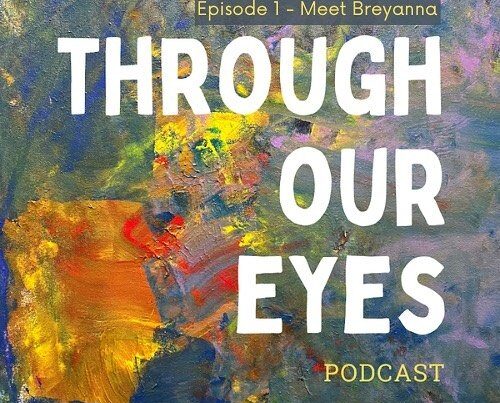
Season 3 | Episode 41
January 30, 2026
As the founder of the Children’s Low Vision Resource Center, Paula Korelitz spent decades turning advocacy into action for children with visual impairments and their families. In this conversation, she walks through the early days of meeting families in the NICU, building resources that did not exist, and connecting education, research, and real-life learning in meaningful ways.
Paula shares why active learning changed her practice, how the Resource Center introduced families to tools, teaching strategies, and community support, and what she believes parents, educators, and young adults need to hear today. This episode highlights the power of early advocacy, thoughtful education, and one voice willing to build what systems had not yet created.
Join PRRF April 17-19, 2026 for a powerful weekend that educates, inspires, and unites. Saturday’s Family Connection Conference brings education and resources to families affected by pediatric retinal diseases, while Sunday’s Hope for Vision Walk brings together our community to fund critical research and programs. Participate in one or both events, either virtually or in person at Oakland University in Rochester, MI: https://prrf.org/upcoming-events/united-in-hope/
You can find more episodes and ways to get involved with the Pediatric Retinal Research Foundation here: https://linktr.ee/throughoureyespodcast
Transcript
Luisa Recchia: [00:00:00] Welcome back to Through Our Eyes, the podcast with the Pediatric Retinal Research Foundation. I’m Luisa Recchia, and today I’m joined by my co-host, Dr. Patrick Droste. This episode is a powerful one. Our guest, Paula Korelitz, is a lifelong educator and advocate whose work shaped how children with visual impairments and their families were supported, not just in Michigan but around the world.
From serving children birth through age 25 in Detroit public schools to helping build the children’s low vision resource center to introducing families to active learning and dignity centered education. Paula didn’t wait for systems to catch up. She built what didn’t exist. You’ll hear stories of courage, innovation and deep humanity.
You’ll hear why hand underhand matters, [00:01:00] why advocacy starts early. And how one committed voice can create ripple effects that reach across countries and generations. So whether you’re a parent educator, clinician, or young adult navigating vision loss, this conversation is full of wisdom you can carry forward.
Let’s dive in.
Paula Korelitz: Michigan is unique. It is the only state in the union where special education is birth to 25.
There’s no other state that has that, and I have taught everyone from birth to 25. So I’ve had experiences with. Infants. I’ve had experience with school age children. I’ve had experiences with 18 to 25 year olds in, as a teacher. My first assignment was in a classroom where visually impaired and physically or otherwise health impaired children.
And I had no background in, in POHI. And so I [00:02:00] distinctly remember one of my first students ever, um, and I can use his name because his name is Donald Smith. So not a problem. But he had severe cp and I’m a brand new teacher. It’s the beginning of the school year. It’s, early September.
And I think what’s wrong with this kid’s parents, this kid smells and I, and I, I need to take him into the lavatory and wash ’em off and get ’em cleaned up. And by the time Winter set in and I had to put a winter jacket on Donald. My whole attitude and my knowledge base changed dramatically. And I’m thinking, this is so difficult.
And at one point I joked with Donald and I said, you know what, Donald, because you ha, I had to remember which arm was the easiest to get into the jacket first one that had the most movement. I had to do the [00:03:00] one with the least movement first so I could get the one with the most movement.
And second. And I remember joking him and saying something like, Donald, I think we’ll just cut off your left arm so that I won’t have to think about what I’m doing. And we both had a big laugh. So, um, that was my first teaching assignment and obviously I’ve learned a lot since then. But that was my first teaching assignment.
Dr. Droste: Now you’ve had a pretty good foundation in working with not only visually challenged, but also physically and otherwise health impaired children. but you had a special fondness for the visually challenged children, and I think that’s kind of what, what led you to our organization of retinopathy, prematurity and associated retinal diseases.
Can you talk to us a little bit about that?
Paula Korelitz: My initial experiences were with Dr. Trese, not ROPARD. Yep. And he was not as, [00:04:00] frequent a refer of children as Dr. Baker was. And I used to have to really nag him. I’d call him up and nag him about, you didn’t refer this kid to me.
so eventually that process came in into a smooth process, uh, based primarily on the help of, of Mary Nichols, uh, who started making the referrals directly to me.
Dr. Droste: And Mary Nichols was the chief administrative agent, worked with, with Dr. Trese and the other retinal specialists, correct?
Paula Korelitz: Right. She actually, uh, I think scheduled all the appointments for the, the families. Um, and, uh, and so she knew the families, uh, intimately and, uh, she was tremendous. She was absolutely tremendous and very dedicated. And actually. It was her intervention that actually got me involved with ROPARD.
[00:05:00] I had, um, been ill and she knew that I had been ill and she kept in touch with me. And, uh, when I was feeling better, she said to me, you know, Dr. Trese would really like to start a website. Are you interested in coming in and talking him, talking to him about that? And I said, absolutely. So that was what my first volunteer position with ROPARD was.
I, I started their, their website and then it evolved to a, a much more, uh, encompassing position. And it went from being a volunteer to being a paid employee.
Dr. Droste: And tell us, uh, how did that evolve into the Children’s Low Vision Research Center, which you founded?
Paula Korelitz: even before I was.
Volunteering with ROPARD, uh, Dr. Trese would on occasion call me and say that he had a family that was in town for surgery [00:06:00] for their child, and would I visit them in the NICU? And so I would, after work, I would go to Beaumont and I would sit down with the family and talk to them. And evidently they were pleased with that.
And so Dr. Trese knew that it was something that was helpful. And uh, when I started the website, uh, Dr. Trese also said. I think it was on Tuesdays. I, I’m not sure, but I, there was one day of the week that was set aside for families to come in with, with young children. And, uh, he asked me if I would come in and work with the families in his office, which I did.
I, you know, came in and we sat and talked and if I was talking to one family over here, there’d be another family over there that would kind of like edge over and I’d think, come, come join us. And we, we’d talk, but I didn’t have the resources that I needed to really provide the help that I [00:07:00] wanted to help those families with.
And so, uh, Dr. Trese and I talked about that and. Our initial, uh, response was to rent an apartment across the street from Beaumont. And, uh, we were in that apartment and I, it was just me at that point and seeing families. And then when Rosemary retired, I said, you can’t retire. You have to come and work with me.
And so, she worked with me and was a tremendous asset because while we saw families from over 40 countries because of Dr. Trese. Rosemary was fluent in Italian, and remember Pat, that, uh, there was a strong connection with, uh, very strong
Dr. Droste: connection
Paula Korelitz: Yes.
Dr. Droste: With Italy.
Paula Korelitz: Yes. Uh, with the Italian community in this area.
And so there was a higher percentage of families that came in from Italy than from anywhere else. And so Rosemary’s [00:08:00] fluency with Italian was a great gift. And, uh, she kept in touch, um, with, with many families through email that came from Italy over the years too. So, so we started in that, in that apartment.
And we outgrew that apartment. We had all kinds of stuff that we wanted to have on hand, and we, we didn’t have it. We didn’t have the room to have it. And so, um, there was, uh, Serendipity, uh, uh, a florist shop across the street from Beaumont was, uh, had a big for lease sign on it, and we went and looked at it and it was perfect.
Uh, the first floor was used for the Children’s Low Vision resource center, and the second floor became the space for ROPARD board meetings. So it worked out really well all the way around. And we had fabulous equipment there, all kinds of resources, and it was, um, it was [00:09:00] so beneficial to the families.
It was just, it was. Phenomenal. It was. And,
Dr. Droste: and can you tell us a little bit what made it so phenomenal was the teaching philosophy of Lilli Nielsen in active learning, um, and how it applied to visually and neuro visually challenged children. Can you talk a little about, about that?
Paula Korelitz: Yes. I met Lilli, um, before she became world famous.
I went to a conference, I can’t remember what city it was in. I went to a conference and I met Lilli. And the line that I will remember for the rest of my life was contradictory to everything that I was taught in teaching children with visual impairments. Um, we were taught to take the child’s hand and direct the child’s hand and Lilli’s
comment was, taking the hand of a blind child is like covering the eyes of someone sighted. And I thought, oh my God, she’s right. She’s [00:10:00] right. So instead of hand overhand where you’re directing Lilli process was hand underhand where the child still had the ability to touch or not touch, you weren’t forcing them to, to experience something.
You were leading them in that direction.
Dr. Droste: You’re just kind of guiding them,
Paula Korelitz: just guiding
Dr. Droste: and letting their extra visual senses to direct their behavior.
Paula Korelitz: Yes. And so that was what made me become not just a colleague but a friend of hers. We, we, we became friends throughout her life. But she created.
All kinds of equipment and materials and, um, that no one else had ever thought of. And I think the most impressive thing that she created was something called the Little Room. And it was a box that cost a lot of money actually. It was a box with [00:11:00] plexiglass on top and holes drilled into the plexiglass on top and.
Objects were suspended from those holes that the child could interact with if he or she wished to. And so the idea was to have not random, um, but like, if the right hand was touching something, uh, soft, maybe the left hand would be touching something hard. If the light hand right hand was touching something squishy, maybe the left hand would be touching something smooth.
And so that there was this experiential thing for this child where they were exploring and, and learning differences and similarities. So brilliant. An absolutely brilliant piece of equipment that she created and other equipment also that, there was this bench that she had, and initially when I saw the bench, I thought, Ooh, don’t like that at all.
It looked like, [00:12:00] do you remember those old TV stands? Yeah. So it looked like an old TV stand and you put the child down on their, their on their stomachs so that their hands and their head were facing down and their feet and their legs were facing down and their were literally dangling. They were literally, they were dangling and there was all kinds of stuff, uh, around in front, under their hands and under their feet that they could, again, have experience and
Dr. Droste: they could reach out for things they could feel and not necessarily see, but they, and it would make them stretch and it would make them do things that otherwise they wouldn’t do.
As you said, it’s active learning rather than passive with the hand over the hand.
Paula Korelitz: Yes. So, I mean, she was absolutely brilliant. She was, um, made a a knight by the, the Queen of Denmark, um, honored by the, uh, the Queen of Denmark for her work. Uh, she’s a brilliant teacher. Brilliant.
Dr. Droste: It was world famous and her concepts [00:13:00] were widely adapted here in Michigan.
Tell us a little bit about the Penrickton Center and Okay. And how it used Lilli’s teaching.
Paula Korelitz: Okay. I need to go back even further.
Dr. Droste: Mm-hmm.
Paula Korelitz: My first experiences with children with visual impairment started in elementary school. I was a reader in a classroom that was called the sight saving classroom.
Back then, they thought that if a kid used their vision, they would lose their vision. So it was the sight saving room. I was a reader in the site saving room, and I volunteered at a place called Penrickton Nursery for the Blind, it was called then. It was a a facility that was created by three families with children with visual impairments.
Uh, their, the kids’ names were Penny, Rick and Tony, Penrickton. So that was the name of the facility, Penrickton Nursery for the Blind then. And I volunteered there as a [00:14:00] tween, tweenie and a teenager. Uh, so I had a lot of experience there. And, uh, when I first met. Lilli and active learning. Penrickton then was a a far different establishment.
It was no longer just a little day nursery. It was a a, a center for visually impaired children where the kids lived there Monday through Friday. And, parents could pick them up and take them home every day. But for the most part, the kids were there Monday through Friday.
And when I first met Lilli, I was so enthralled with what she was doing. I knew she was coming back into the Midwest and I met Kurt Sealey, who was the director of Penrickton, and I said, you have to send your staff to this conference in Ohio.
And he said, we don’t send our staff outta state. And I said, Kurt, I’ve never told you you have to do something. You have to do this. You have to send your staff there. [00:15:00] And they not only became active active learning people uh, Patty, uh, and Cindy who worked at Penrickton I think were the heirs apparent to Lilli’s work because their, their center was very similar to what Lilli was doing in Denmark.
I think that she felt very comfortable that they were going to carry on her her work while she was alive in it. And after she died.
Dr. Droste: The, uh, we had the privilege of having her come to Grand Rapids, the O’Hare Foundation. Patrick and Maria O’Hare had a visually impaired child that died at a young age.
And, um, but they met Lilli and we brought her to Grand Rapids. And Patty and Cindy from Penrickton came with her and helped her teach these courses to occupational therapists, teacher, consultant, vision impaired parents. I mean, these [00:16:00] were extremely well attended seminars, uh, that took place at the Helen Devos General Hospital.
But it ignited the active learning movement here in West Michigan, which is persistent here today. And it’s kind of like the Orton Gillingham. Which is used for learning disabled children with dyslexia. But the active learning of Lilli Nielsen has become a very common thing in special ed communities, um, here in West Michigan and all the school districts.
And it all started with you and your work with Lilly and spreading that word via Penrickton. So that was an incredible accomplishment. Now let’s move a little bit. You talked us a little about how you started with the ROPARD and you started the Vision Resource Center. What were some of the challenges you had to keep the [00:17:00] Children’s Low Vision Resource Center functioning.
Paula Korelitz: Well, um, I applied for a lot of grants because I wanted all kinds of equipment in there. And working for a nonprofit, you don’t ask for thousands of dollars to buy stuff that parents and children can have exposure to. So, um, I did, I, I wrote a lot of grants and was fortunate enough to receive money from the, from those, uh, applications.
And, uh, I, I don’t know. I, I, there the only, there were no challenges for the life of that center until it, it ended. Uh, Dr. Trese was remarkable in the fact that he knew that he could medically perform miracles, but that families still needed. The knowledge of what to do after they left the office.
And I don’t think there [00:18:00] was another medical professional dealing with specialties, with any kind of children’s pathologies that was doing anything comparable to what he was doing. He was really special. Really special. He was,
Dr. Droste: he was very special. And were you in translating his research and his surgical skills to kids that had some type of sight but also needed a special kind of education can you tell us, you did some work with the Hadley School for the Blind and also with the Perkins Center.
Can you tell us a little bit about that?
Paula Korelitz: As I said, we saw families from over 40 foreign countries, and while we could provide materials for them to take back exposure to, um, uh, the little room and to braille writers and, um, and low vision devices, and we took them to, [00:19:00] uh, low vision specialists because they didn’t have them in their countries.
W we, we could do all of that at the center. It was exceptional.
Dr. Droste: And you kept in touch with people after they left the country, didn’t you?
Paula Korelitz: Yes. So, and that’s the point of both of those organizations, Perkins and Hadley were, uh, resources that families could use.
When they got back home. So, I mean, they could call or email Rosemary or myself, but Hadley had courses, uh, it wasn’t just a resource. The parents could sign up for parenting courses um, and and Perkins had resources in foreign countries. So if we connected them with those two establishments, then their whole field opened up to a far greater extent.
And, uh, uh, so, you know, really thrilled to be able to, to do that. And, uh, one of the [00:20:00] things we didn’t touch base on, uh, earlier was we really encourage parents to be proactive in other ways for their children and. So I don’t know if we did it in many places, but I know for a fact that in the Philippines we had a family that came from the Philippines and when they went back, they changed laws in the Philippines, they established a parents group.
And so being able to throw that pebble in the water and see the ripples that it created that was just so satisfying.
Dr. Droste: You know, one of the, the things that happened, uh, when we were together at ROPARD is we had to have fundraisers because we were, as you said, nonprofits and we had to try to keep money to keep not only the Vision Resource Center, but some of the other programs.
And there was, um, [00:21:00] one that was very fascinating. We brought a vision and it was through you that we brought this, visionary by the name of Ray Kurzweil, who came to the meeting in, in May of 2008 when we had it at Detroit Institute of Arts. And Dr. Mark, a retinal specialist, was given a vision award for his work on I, retinal chips that were being developed to restore sight for people with macular degeneration.
tell us what was amazing about the Ray Kurzweil presentation.
Paula Korelitz: So, Ray, the reason I approached Ray was because he created the first piece of technology that I was ever aware of that had assistance for children who were visually impaired. It was called the Kurzweil Reader, and it was, um, a device where you could put a piece of written material down on a sliding tray.
And it would read that printed material to the user. And one of the things I loved was [00:22:00] so early in, in technology that, um, this device for the blind, when it read the word B-L-I-N-D, it read it as blend. And but uh, so, um, when I approached Ray to present it, uh, at a fundraiser for ROPARD, he said, I would love to do that as an interactive hologram.
So that’s how he presented. He was in Boston, California. He was in
Dr. Droste: California
Paula Korelitz: maybe. Yeah. Um, and we were at the DIA and, um, and setting up the technology to do that was. Terrifying. Up until the very last minute. We weren’t sure it was gonna work, but it did work. And it was fascinating. I mean, he, he looked like he was standing on the stage at a podium, but he wasn’t there.
Dr. Droste: It was in 2008. Now that’s quite a while ago. And you have to realize this was, [00:23:00] was so unique to see a, a podium and then this square box, it was perfectly square up. And a man standing in the middle of it at the podium talking, it was, it just blew my mind to, you know, I almost kind of forgotten. He talked about a thing called the singularity.
Can you tell, tell us a little bit about that.
Paula Korelitz: He kind of, he’s a futurist and, obviously a great mind. A great mind. And he was talking about ai, not calling it AI at the time, but he was talking about AI back then and how at some point, humans and, and uh, computers
Dr. Droste: and technology,
Paula Korelitz: yeah, were gonna become one.
Uh, so, he’s still projecting that is something that’s going to happen in the future, but it’s so much closer now that yeah, we can, [00:24:00] back then it was like really? And now it’s like, oh yeah, it’s, it’s happening. It’s happening.
Let’s talk about our favorite fundraiser, Pat.
Dr. Droste: Let’s talk about our favorite. It was the best of the best. It was a highlight my whole career in with ROPARD and PRF. It was Erik Weisen. Tell us about him.
Paula Korelitz: Weihenmayer. Weihenmayer. I read Erik’s book, which was called Touch the Top of the Mountain.
Erik is totally blind and he has climbed about the seven tallest mountains in the world. And he’s led a, an amazing life besides being this, um, person who fears nothing. We invited him to be our keynote speaker and, um, and Dr. Droste will agree with me. Uh, there was a, uh, at the time that he came, uh, there was a doctor’s, uh, meeting going on.
And at the same time we were [00:25:00] hosting Erik with children from not just the Detroit area, but the entire state and, and from Ohio and Illinois. That came just to hear Erik with their families, their teachers, mostly their teachers. And Dr. Droste and I both felt that we were the far better experience than the doctors were.
Um, he was so impressive to those children. We had some kids who were coming from the UP and. They, and they rented a van or something. Right. And it broke down. They left early enough, but it broke down. And so they got there just as we were breaking up. And I walked up to Erik and I explained the situation and I said, they didn’t get a chance to talk to you at all.
And he said, well, I’ll stay and talk to each and every one of them. And he did. And so
Dr. Droste: With his dog, yeah. The kids loved his dog. I can’t remember his [00:26:00] name, but in the background was Erik’s dad. His dad kind of orchestrated, he was like his business manager, but I’ll never forget that he stayed and stayed with those kids and answered every one of their questions and let them pet his dog.
It was a very special time.
Paula Korelitz: It was, it really was one of the highlights of my life.
Dr. Droste: And then that evening we had our big. Big dinner, and it was at the, uh, Henry Ford Museum and, and the whole museum was closed except for our dinner. And Erik spoke and so did several other people. But at the end of that, they opened the museum up so that the children could go and sit in old cars, they could feel things, and it was just tremendous.
The whole Henry Ford Museum was their oyster, so to speak. And I still see some of these children, and they still talk about that day when Erik came with his dog. And, and then [00:27:00] also the time in the museum.
Paula Korelitz: It was a very special event. It really was. We did some other events that were interesting. We did, um, sensory Safari.
Dr. Droste: Yes. I was just gonna ask you about the sensory safari. I remember that. I think, uh, you and Kay worked together a lot and getting all of those furs and these tell us what the Sensory Safari was before I, let me say anything. Tell us what, what
Paula Korelitz: I can’t, I, I, I think the name of the organization was Safari’s International or something.
I can’t remember. But, um, they had all of these skins in taxidermied animals and, uh, one of my favorites was they had an elephant leg that was like a, a stool so the kids could. They could touch the skin of the elephant and realize this was just part of the leg. The snakes and beavers and alligators and all kinds of things for the kids to [00:28:00] actually have hands on with.
So just a, a really neat event for the kids. Uh, it was, it was not a fundraiser, it was just an event for the kids and it was just really great. And we also did something called the High Vision Games for our kids who were low vision. We had all kinds of activities where they had to use their telescopes and use their vision to the, their utmost ability so that they could win a prize at the end.
And it was just, I wish I could say I created that. I didn’t create it. I, um, I re you
Dr. Droste: certainly promoted it.
Paula Korelitz: I promoted and
Dr. Droste: organized it and did not. Kay White work with you on that.
Paula Korelitz: It took a lot of work, period. I mean, it was hours and hours and hours of setting up. I mean, you know, we had probably like 15 different stations, so we had to have, adults at every station and we had to time everything so that we could get the groups through.
It was, it was a [00:29:00] lot of work. Uh, there was a teacher from Kalamazoo who created it and, and we just, uh, copied what she did because when she did it, we thought it was so phenomenal and we copied it and we did it for several years in, in Metro Detroit and that was really wonderful.
Dr. Droste: That was, those were pretty special events.
Now, the in retrospect now, and they always say Retrospect’s 2020 what do you think the organization could have done better for the visually impaired children? And carry on to, to today.
Paula Korelitz: I think what they did was extraordinary at the time. Um, I was heartbroken, uh, when the decision was made to close the center.
Not because I was losing a job, but because I knew that we were providing something that wasn’t available anywhere else and that it was [00:30:00] important and significant. And, uh, and we had no foresight that was gonna happen. I, it, I just got called into the office one day and said, we’re closing the center.
And uh, so we had a lot of stuff that, um, that I had written grants for and I didn’t wanna see it. Disappear. Uh, so, there’s an annual teachers of the visually impaired conference that’s held in April, uh, every year in, in Livonia. And I, put the seats down in my SUV and packed the car to the brim and took all that equipment to the conference.
And the teachers were, well, the little room, which would’ve taken up my whole back of my car, went to Detroit Public Schools, uh, early intervention program, but like, uh, the Braille writers and, and, um, the low vision stuff and the books and, [00:31:00] and the videos and the games and and the toys, all the stuff that we had, um, I took to this conference and had a big table that said, take what you want, take what you need.
And the teachers thought they were, in Santa’s workshop, stealing stuff. So it was, that was really great, uh, to be able to do that. But I mean, I understand that the board’s focus was on research, and I understand. How worthy that focus is. I just think that there should have been a way that we could have maintained, what we were doing for the families who were already, um, dealing with children with visual impairments.
Dr. Droste: Well, you’ll be pleased to know that your wish is still being carried out. With the PRRF, we have the family advisory committee, which is [00:32:00] totally patient and family based ways to get children to be more confident with their visual impairment and also to prepare them for the future to become gainfully employed.
And we are gonna have a very good session on that. This, uh, in a few weeks the influence of of ai, artificial intelligence, as well as new technological equipment. That’s very much along the line with Ray Kurzweil talked about 20 years ago, and very excited about that ’cause it brings in people from all over the country and can kind of continues what you started with.
The, uh, vision Resource Center, although not quite to the same extent, is yours was a continuous program going on every week, whereas ours is once a year. But [00:33:00] it has some really good values and we’re still doing some community-based efforts to translate our research into making lives better, which is what our real goal is.
I think this has just been a tremendous discussion with you, Paula, and I’d like to thank you very much for spending time with us to, to share your insights and your experience in Detroit and how it translated into our involvement with the Pediatric Retinal Research Foundation and earlier ROPARD.
Luisa Recchia: Paula, thank you so much.
Uh, your enthusiasm and the love and the passion for this work just exudes, uh, I just, I I can see, you know, most people it’s still there. It’s still there. I know, I know. How does that happen? I mean, that’s a, that’s beautiful. I, I, it’s not common or often that we talk to someone who still has a passion that they [00:34:00] had from day one years, you know, years ago and, and started this.
So, God, I commend you for that, which made me as, as I was listening to you yes. If you had to go back and tell your younger self, uh, when all this started what would you tell yourself?
Paula Korelitz: Boy, I, I don’t know. I guess if you, if you think something might be able to happen, make it happen, uh, don’t, just don’t assume someone else will do that.
I spoke earlier to Dr. Droste and I said that when I first started teaching the law in Michigan was that a child needed to have an acuity of under 2070 to be considered visually impaired. And the pediatric ophthalmologists were treating these babies. Their reports would say, unable to measure.
Um, and not just the babies. Kids who [00:35:00] were multiply impaired, um, also would fall through the cracks. You know, if they lost their vision later in life, they would fall through the cracks. And so a colleague of mine who worked in Oakland County, she and I, her name was Sharon Kirchner, she and I went to the state and we convinced the powers that be, that teachers of the visually impaired were equally qualified to determine if a child needed the resources of, of special education.
And while there were some kids who probably didn’t technically qualify. It didn’t hurt, it didn’t hurt to have those kids from birth to three and provide a foundation that might help them later on. I was always gutsy. I was always not easily intimidated. And I, I, I, I just wish that there were other people who, didn’t feel like that they, [00:36:00] that their voice alone could make a difference, because I think a voice alone can make a difference. And, uh, and if there were more people who did that, we’d be in a much better world.
Luisa Recchia: Well, for our teacher listeners out there, I hope that they’re listening and they hear you because I know all those folks that you advocated for.
This is fantastic. Thank you so much for advocating for those children. I know I’m sure you’ve made a huge difference in their life. For the parents out there that are listening, what would you tell them?
Paula Korelitz: I think there are a lot of things that, I know that one of the things that that I talked to parents about initially when the, the first visit they would come to the center was their ability to learn braille braille looks intimidating.
And I would often say to them, depending on where they came from if I said to you, you had to learn Russian or Chinese, that would be, [00:37:00] that would be really scary. But if I said to you, you have to learn French or Spanish, not so scary. Um, and so my introduction to braille was, um, uh, that several of the braille symbols actually look like the letters in print.
And so if they just got that down, that would be important because if your child’s gonna be a Braille reader, you should be a Braille reader too.
Luisa Recchia: Yeah. Thank you, Paula. Before we close and, and I’ll is there anything that we didn’t ask or anything that you wanna share to our listening audience about whether it’s teaching or parenting or the young adults, what do you tell them?
Paula Korelitz: Um, if we’re talking about teaching I worry about what’s gonna happen in the future in terms of special ed. I really, really worry about that. So, I, I hope that they advocate and, and, [00:38:00] and work to make sure that their children get the education that they need, that they demand that their children get the education that they need.
I always told my families don’t go to an IEP meeting by yourself. Take someone who’s I would say, from the National Federation of the Blind at the time, because they tend to be really strong advocates. Uh, so, uh, but take someone other than yourself, someone not emotionally invested in your child, but who knows, uh, what can be done.
Those are critical things that need to be done. Teachers. You need support from one another. You need to take a breath. You need to feel like, uh, taking your summers off isn’t, is not something that is a privilege. It’s something where you can spend some time and learn some new things and but rest and, and draw some strength so that you can go on.
Because working in most school [00:39:00] districts not an easy job. I don’t care what school district it is most, for the most part, it’s not an easy job. So, um, build up your strength during the summer.
Luisa Recchia: And our young adults, what do we wanna tell them? Those young adults, all those young children that you touched their lives early on, that are now adults.
Paula Korelitz: So I’m gonna say that I have a 25-year-old grandson who graduated from college and has no physical, mental problems whatsoever, and can’t find a job in his career. And so for these young adults who are dealing with an impairment that people are going to see as detrimental for them doing a job successfully, you have to really be able to sell yourself, start early in life, create um, journals that, um, talk about the things that you’ve done, not just for yourself, but [00:40:00] for your community and and build some bridges.
Because getting a job today, especially with AI coming, is going to be hard. And so technology is going to be an advantage, but people are still going to look at the disadvantages
Dr. Droste: or the human element or the human element.
Paula Korelitz: Yeah. Yeah. They’re still gonna look at the disadvantages. So you have to, um, as I say, I have, I have a grandson who can’t find a job, and it drives me crazy. He’s smart. He should have a job. And life is tough for so many people. And so it’s not, it’s not the fact that you’re visually impaired, that it necessarily is gonna impede your, your dream job, but it certainly isn’t going to be a benefit.
So you, you need to prepare yourself, your parents, and you need to prepare yourself early on so that you can, um, have a step up.
Luisa Recchia: [00:41:00] Beautiful.
Dr. Droste: You know, one thing I might wanna just just add is, um, when the Low Vision Resource Center was closed, was closing actually before that, I had the privilege of bringing three or four occupational therapists from West Michigan was on a, I can’t remember, it was very similar to weather. It was in middle of winter and it was cold and snowy.
But, um, Paula opened it up and explained to her all the concepts of active learning, including little room and, uh, they, we talked all the way back and they were just so inspired. And that inspiration is continued at the Mary Free Bed Center for, for children. And they’re going, they’re building a new all children’s rehabilitation hospital, and it will have a area for the, uh, visually impaired
Paula Korelitz: super.
Dr. Droste: We’re pretty excited. The last little thing is, is, um, you [00:42:00] know, when Paula brought all her stuff to the Livonia meeting, I, I was at that meeting with Dr. Capone, Dr. Trese, and I can remember how excited they were to get so many of your gifts. And I was a recipient also. I remember going to one of those tables you’re talking about, and I brought some vests and some things to put in our little rooms.
We, I had a patient of mine. He made two beautiful all wood little rooms in honor of his daughter. And, uh, we still use them today and I still have a lot of your vests and a lot of your dangle toys that, that were in the plexiform tops of the little rooms. So the, uh, the Vision Resource Center continues.
So
Paula Korelitz: The vest, uh, uh, Luisa, um, Rosemary and I were privileged to be, made members of Delta Gamma later in life. I was not a sorority girl, and I don’t think [00:43:00] Rosemary was either. But, the Delta Gammas did so much for us. They would make all kinds of things that we would give away to every family that came to the center.
We had vests for the older kids and we had bibs for the little kids and stuff was attached to those, again, with different textures and and the ability for the child. Not to have to look for a toy that they lost on the ground, but something that they could touch whenever they felt like it.
Those were super important for us. And, uh, so Delta Gammas were really a huge asset for us when we ran the center. And going back to what Dr. Droste said about his visit to the center, um, we had two experiences that were along similar lines. One was when I started the website the internet was in its infancy and, uh, [00:44:00] I don’t even remember how I found it, but I was looking for retinopathy of prematurity on the internet.
And there was one website and I was able to contact the doctor who. Who created that website. And I called and said, uh, would you be upset if I started another website about retinopathy of prematurity? And he said, no I don’t think so, but you know, why are you doing this? And so I explained my relationship with Dr.
Trese and he was like, oh, Dr. Trese. Oh yeah. Oh, absolutely. Go ahead and do that. And then he called me back and he said, any chance that I can bring my office manager and spend a day with Dr. Trese in surgery and a day with my office manager in your center? And I said, sure. And so he came and he went back and tried to recreate that.
And then, uh, there was a doctor that was, [00:45:00] um. I think he was a, a fellow, uh, studying with Dr. Trese. He was from India and Bangalore. Bangalore. And he was actually living in the center because he couldn’t afford to live in the hotels. I mean, so he was sleeping on the floor in the center. Um, and he got so impressed with the center that when he went back to India, he recreated that as, as best as he could too.
There were ramifications that we never expected and that were so, so meaningful to us that, that they happened.
Luisa Recchia: The ripple effects of just one small idea. So powerful. Thank you so much, Paula.
Paula Korelitz: Oh, such a privilege. Thank you. Thank you. Thank
Dr. Droste: you, Paula. It was really great. Thank you.
Yeah. Thank you for spending the time with us.
Luisa Recchia: Paula. Thank you. Your passion, your courage, and your refusal [00:46:00] to accept. This is just how it is. Have changed lives and not quietly. The ripple effects of your work are still moving, still teaching, still opening doors. One line from today really says it all. If you think something can happen, make it happen.
That’s advocacy. That’s leadership and that’s the reminder we all need for parents. Advocate early and don’t do it alone. For educators, rest, recharge, and support one another. You matter too for young adults. Build your story, own your strengths, and prepare yourself for a world that still needs to catch up.
And if today’s conversation resonated with you, we invite you to continue it with us at the Family Connection Conference on April 18th at Oakland University in Rochester, Michigan. A day dedicated to families, connection, education, and empowerment. You’ll find all the details on our [00:47:00] website at prrf.org. Dr. Droste, thank you for helping guide this conversation and for continuing to connect research medicine and real life impact through the Pediatric Retinal Research Foundation.
We also want to take a moment to honor the late Dr. Michael Trese, whose persistence and entrepreneurial spirit transformed pediatric retinal ophthalmology and continue to shape this work today. While the Low Vision Resource Center is no longer physically here, its Spirit very much lives on. At the Pediatric Retinal Research Foundation, we are actively building new programs to support families today, including a mentorship program that connects newly diagnosed families with those who have already walked the path in a private community portal where families can ask questions, share experiences, and find trusted support.
These programs are designed to ensure that no family [00:48:00] feels alone and that knowledge, encouragement, and lived experience are always within reach. Look for these programs on our website at prrf.org. Thanks for listening to Through Our Eyes Podcast. Share this episode with someone who needs encouragement, and remember, one voice really can make a difference. Until next time.




 English
  Español de México
  Français
  Deutsch
  Nederlands
  Português
  简体中文
简体中文  日本語
日本語  Русский
  Italiano